

Regenerative Education
"It takes a village to raise a child."


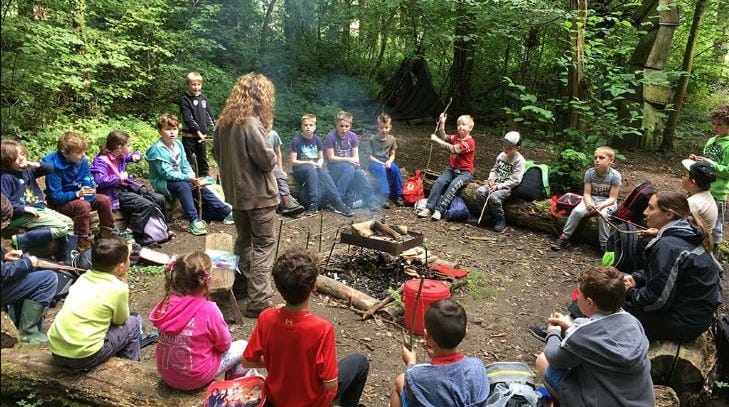
In traditional education, a child is taught to sit still, stay focused on the board, and stop asking questions. Limiting their movement and ways of sensing and absorbing information has already taught them at a very young age to cut their curiosities and accept what is in front of them.
Our current education model, admittedly, does not nurture a child’s geniuses.
Yet in that knowledge are continuous explorations of answering this question: what is the real potential of education in the modern times when its system right now is outdated?
A generation shaped by that system is now trying to rebuild a relationship with their own curiosity. The question is whether the next generation has to go through the same unlearning.
What Traditional Education Took From Us
We naturally look up when we are trying to recall or imagine information. Doing so in class or in an exam as kids would sometimes result in punishment.
“Hey! Pay attention and stop dreaming!”
This is one way the conventional system introduces shame, standardization, competition, and disconnection from body and curiosity.
We also have different ways of learning things. Visual, auditory, kinesthetic, sometimes a combination of them, and even more. Yet in a traditional setting, these faculties are often limited, usually to make space for memorization rather than critical thinking.
Many adults in regenerative spaces are still unlearning what school conditioned them to believe in. They were taught to see everyone else as a competitor — for resources, attention, economic standing. That is the narrative many are now consciously releasing.
The standardized curricula have deliberately excluded much of our relationship with ancestral wisdom, nature and ecology, oral tradition, and ceremonial knowledge. It created a system of cultural erasure; of rewarding conformity to specific standards of one culture rather than celebrating diversity, complexity, and authenticity.
It has shaped a generation that was educated to extract, compete, and consume. Lessons about the “real world” being a rat race or that we “study to find work” have influenced adults to believe that they had to fend for themselves.
Regenerative education, then, aims to build bridges for children (and adults) to sense the world in ways that respect our natural rhythms, reconnect to our roles as Earth’s stewards, and relate with ourselves and others more lovingly.
*Gertie’s note: My Mom shared with me that in my first week of kindergarten, I kept leaving the classroom to go down the slide in the school playground. The school’s response at that time was to ask my parents to transfer me to another school. The directress told my Mom that she was suspecting signs of autism, and it was like I was already pathologized without asking properly why I behaved that way.
Eventually, my parents realized that I had no idea that my teacher was already calling me. At home, my name was Gingging - my childhood nickname. I had never heard the name “Gertrude” in my entire life.
And so, when they transferred me, my new teachers never complained. At least, that’s what my Mom told me. Years later, I returned to the original school for primary, and excelled academically.
*Yoshi’s Note: I remember when I was in 5th grade in Pedro Vicente Maldonado, a small town north west of Ecuador, where if someone didn’t pay attention or obey to the teacher, the male teacher had the authority to makes us extend our arms and hands, open our fingers wide to hit us with the edge of the ruler, making us cry - but if we were to cried loud, they will hit us again. Depending on what behavior we had, they had different hitting tools and strategies. The ruler was one of them. There was also a small whip to hit our legs, the broom stick to hit our shoulders. They will also pull the sideburns hair or make us kneel in a board with upside down bottle crown caps that will leave our knees bleeding. It was really harsh, and it was all normal. In some places in Ecuador it is still a practice. This is just one of many examples worldwide of what conventional education is.
The Body as the First Classroom
There is another layer of what conventional schooling takes from a child - one that rarely enters the conversation about education reform.
Five days a week, for most of their formative years, children are fed inside institutions. And what fills those cafeteria trays tells its own story about how we value a child’s capacity to think, feel, and grow.
Industrial pizza. Canned pasta. Processed meats and sugar-dense snacks. These are not edge cases - they are the standard in most public schools across the United States and in many countries worldwide. The same quality of food you find in hospital corridors and airplane cabins. Built for shelf life, not for life.
And it doesn’t stop at the school gate. Many lunch boxes packed at home carry the same pattern: packaged crackers, processed cheese, a sandwich built from ingredients designed for convenience rather than nourishment. The weekend brings its own rhythms - family gatherings, restaurant meals, movie nights with the same processed comfort foods that have become cultural ritual.
None of this is a judgment of parents. Most are navigating exhaustion, limited time, and food systems designed to make processed food cheaper and more accessible than whole food. That is a structural-designed reality, not a personal failure.
But the cumulative effect on the gut - and therefore on focus, mood, immunity, creativity, and emotional regulation - is real. A microbiome weakened from early childhood shapes a nervous system that finds it harder to be curious, resilient, and present. The body that cannot absorb nourishment cannot fully absorb learning.
This is why regenerative education cannot be only about pedagogy. It must include food. It must include the rhythms of nourishment, cleansing, and care that restore the body’s intelligence. Teaching a child to sit with curiosity in a forest means nothing if their gut is inflamed and their attention is scattered before they arrive.
Some families are already shifting this. Parents who prepare whole food from scratch, who cook with their children on Sunday afternoons, who make the kitchen a place of deep conversation and habit practice. These are acts of regenerative education as much as any curriculum choice. They are teaching through rhythm, through relationship, through the quiet transmission of knowing that the body deserves care.
Leading by example here is not about perfection. It is about intention made visible. A child who watches their parent choose food with awareness, who learns to taste the difference, who grows up understanding that what enters the body matters. That child carries a different baseline into adulthood.
Detoxification and seasonal cleansing are part of this. Clearing what accumulates - from processed inputs, environmental exposure, and the mixing of foods that strain the microbiome - is not a wellness trend. It is a practice as old as seasonal living itself. Indigenous and ancestral traditions across Abya Ayala have always recognized the need to periodically empty, rest, and restore. Our grandmothers knew this. Conventional culture forgot it.
Regenerative education, then, begins in the body. Before the classroom. Before the curriculum. In the first food a child receives, in the rhythms their family keeps, in the dignity with which their physical life thrives.
Would you like to detox with your family? Or at least yourself to try it out? Join our group for this solstice. Tomorrow we have a webinar to talk about it.
RSVP HERE: https://luma.com/a61v5hoc
What is Regenerative Education?
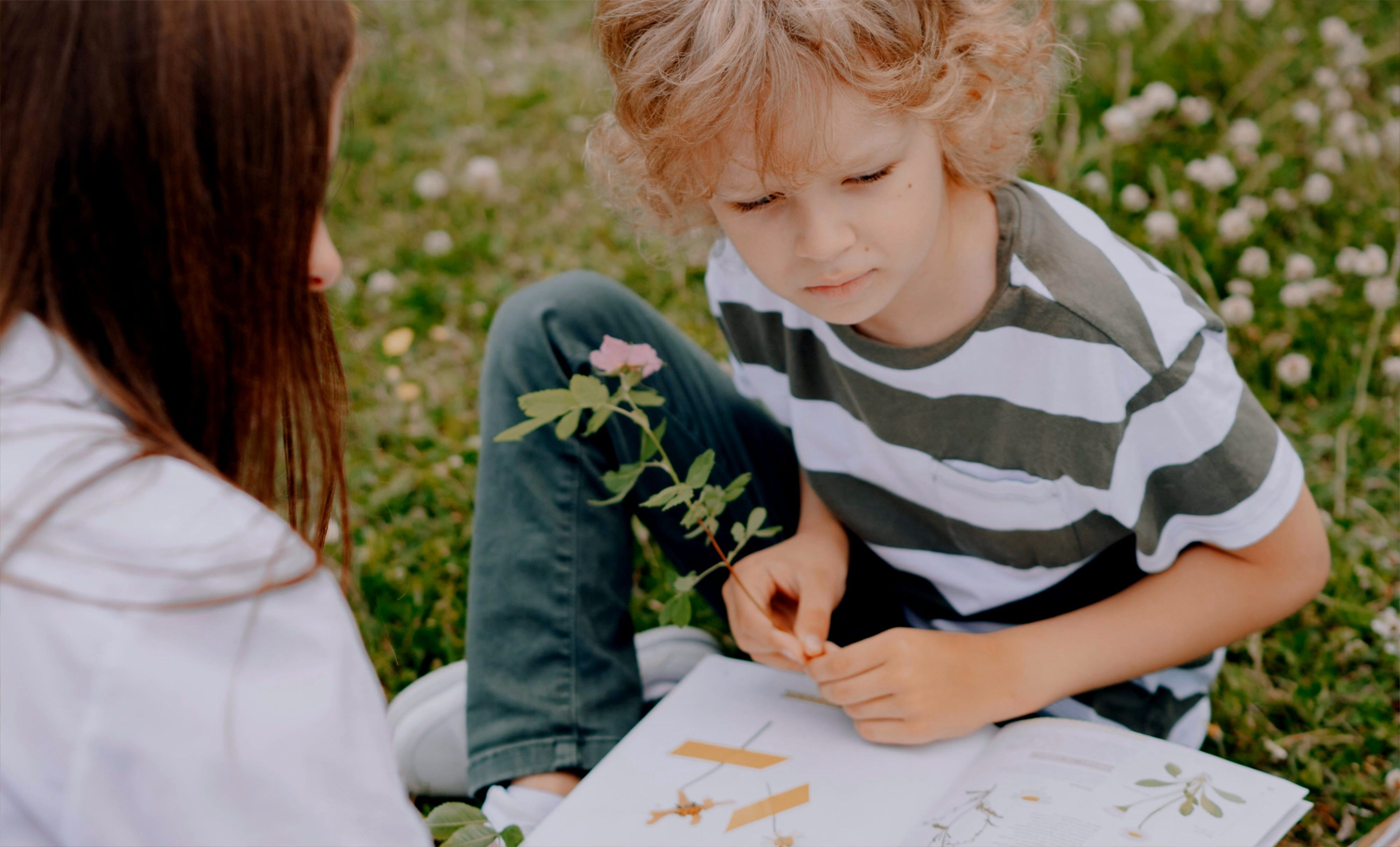
Like a healthy ecosystem, regenerative education gives back more than it takes. It integrates knowledge and wisdom into one’s mind in ways that are aligned with natural rhythms and people’s complexities. It exemplifies learning as relational rather than transactional.
It is education that addresses not just the needs of the 21st century but also the legacy that we wish to impart for the generations beyond this current century.
Conventional education rewards conformity. Regenerative education celebrates authenticity.
It honors the uniqueness of each individual and empowers them to use their gifts to make the world a more dignified place for all living beings.
The principles that this education system embodies are:
Learning as relationship - between the child and the land, the elder, the community, the self
Developmental rhythm over standardized timelines - focus on readiness, not schedules
Place-based and nature-immersed - recognizing the land as teacher
Somatic and embodied - the body as an instrument of knowing, not just the mind
Intergenerational - honoring elders as living libraries
Community as curriculum - highlights what is learned through belonging, contribution, and accountability
It’s major difference is that the conventional model identifies and penalizes weakness. Regenerative education identifies and nourishes what is already alive and growing.
A garden doesn’t punish a plant for not being another plant. Regenerative education values that same lesson to their whole essence - from their pedagogies to their curriculum.
Who Is Already Living This
Many schools who are embodying this already exist from different parts of the world. Some examples include:
1. Green School
With branches in Indonesia, New Zealand, and South Africa, the Green School has been at the forefront of regenerative education. They’re championing a new model of learning that nurtures a child’s worldview, knowledge, and sense of purpose - all while integrating community learning, entrepreneurial skills, and environmental stewardship.
The country’s first bamboo farm school aims to provide free, accessible environmental and agricultural education as a response to “rising hunger, disrupted food systems, and limited access to practical education”. Located in Batangas, Grow School provides immersive lessons to empower the younger generations to address food security and “lead and feed their communities”.
The Waldorf education system focuses on a holistic approach to a child’s learning through the “head, heart, and hands”. Its leanings toward prioritizing inner development and integrated learning modalities inspired many educators in the Philippines to adopt it, including the nonprofit rural-based Gamot Cogon Waldorf School.
This school, particularly, houses students who also hail from surrounding rural villages, making quality education much more accessible to residents of the province. If you want to check out other Waldorf schools from different parts of the globe, you may visit them here.
*Gertie’s note: I’m currently in touch with the community that is building a nature-immersive Waldorf School in Puerto Princesa, Palawan. They’re in the early phases of building it, and they’re also hosting workshops for people who are interested in understanding Waldorf education. Here’s their website if you want to learn more.
4. Pachamama Ecuador
It uses a holistic education model, combining Montessori, project-based learning, and elements of Reggio Emilia and Waldorf, especially in preschool and primary grades. It also describes itself as a personalized, student-centered approach that emphasizes autonomy, exploration, and learning from the concrete to the abstract.
Main methodology
Montessori philosophy, with prepared environments, self-education, and individualized guidance
Project-based learning (ABP/PBL), with individual and group projects.
Holistic education, integrating mind, body, emotions, and social development.
Other Regenerative Education Approaches Worth Knowing
The four schools above are living proof. And the landscape is wider still. Here is a brief map of eight methodologies shaping what Regenerative Education is becoming, organized by the kind of learner they most naturally serve.
For the Child Who Learns Through Movement and Making
Reggio Emilia - An Italian-born approach that treats the child’s environment as a third teacher, where creativity, inquiry, and self-expression guide every project and collaboration.
Forest School - Rooted in Scandinavian tradition, children learn entirely outdoors through seasons and soil, developing resilience, sensory intelligence, and ecological belonging from early childhood.
Steiner/Waldorf - Developed by Rudolf Steiner, this approach moves learning through developmental stages of body, feeling, and thought, honoring the whole child before asking them to perform academically.For the Child Who Learns Through Freedom and Self-Direction
Montessori - Maria Montessori’s century-old method trusts the child’s inner drive to learn, offering prepared environments where curiosity leads and the teacher follows.
Sudbury Model - A radically democratic school model where children of all ages govern their own learning and community life entirely, developing agency and self-trust as core capacities.For the Child Who Learns Through Community and Story
Indigenous Knowledge Systems - Rooted in oral tradition, ceremony, and relationship with land and ancestors, these living methodologies carry ecological and cultural memory as the curriculum itself.
Project-Based Learning (PBL) - Students learn through solving real-world challenges together, building collaboration, critical thinking, and purposeful action from within the community they belong to.For the Child Who Learns Through the Body and Inner Life
Somatic and Contemplative Education - Emerging from mindfulness research and trauma-informed practice, this approach integrates breathwork, body awareness, and emotional literacy as foundational academic skills.
What Education for Generations Not Yet Born Looks Like
The Haudenosaunee, the people of the Longhouse, carry a governance principle that asks: how will this decision affect the next seven generations?
This is the question regenerative education must dare to ask.
Traditional education prepared children for the world as it was - to fit it, to serve it, and survive within it. Regenerative education prepares children for the world as it must become. Not just to adapt, but to tend. Not just to know, but to transmit.
What does a child grow into when they are never separated from their curiosity?
When do they learn from elders and soil and silence as much as from books?
When their uniqueness is treated as a gift of talent rather than a disruption?
They grow into someone who remembers. And memory - true memory, the kind that holds ecological knowledge, ceremonial wisdom, relational intelligence - is what every generation inherits or loses.
We opened this article with a child being taught to sit still. To stop asking questions. To look at the board and not out the window.
Regenerative education begins with that same child - and refuses to ask them to become smaller. And instead asks, what is that they already know, love, and aspire.
And then, now, it builds a world reflective from their answer.
How You Can Be Part of This
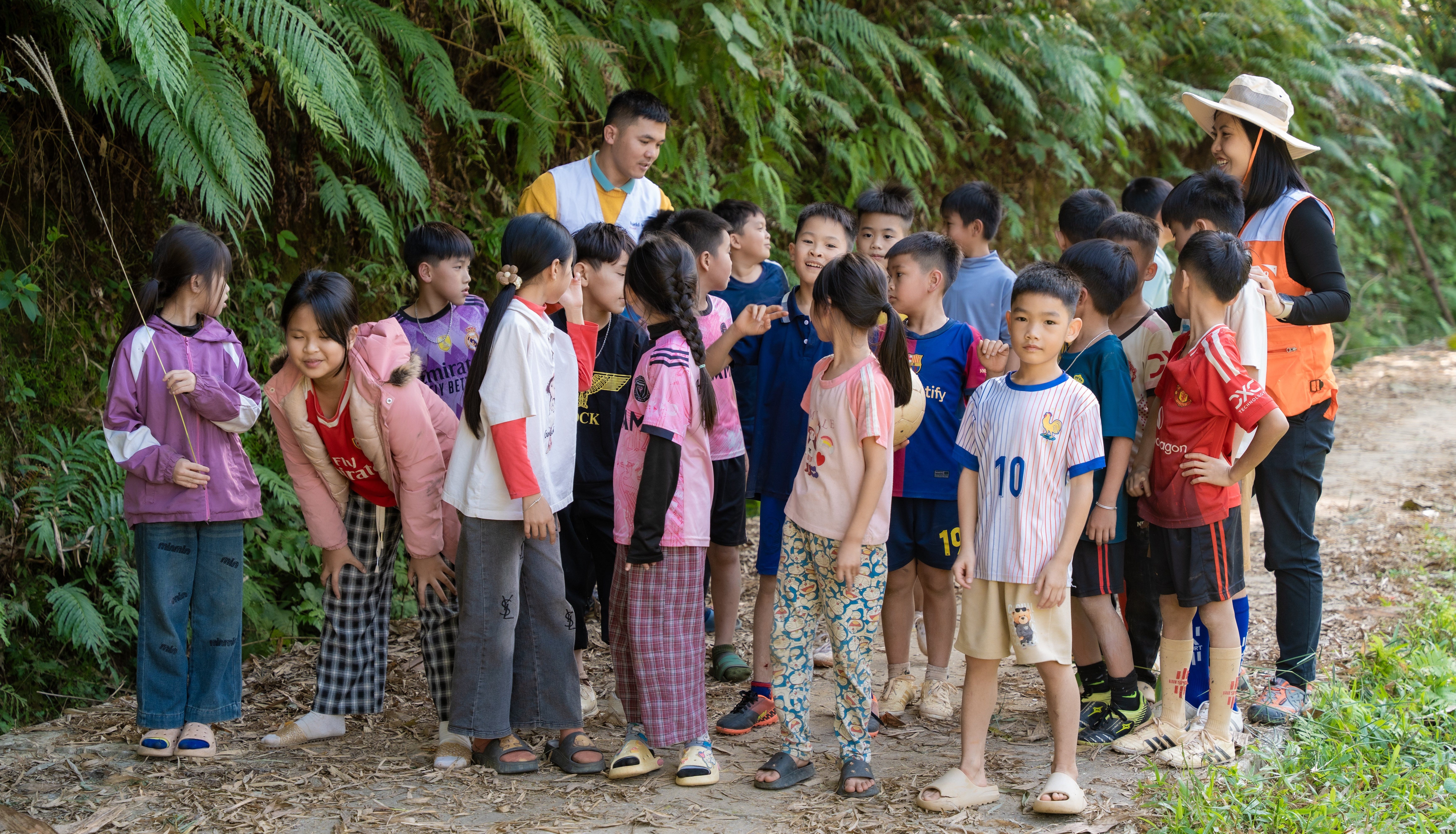
Regenerative education is not only something that happens in a school. It happens in the body. In the kitchen. In a forest. In a community. The world is our classroom.
If you feel it calling, begin there - in your own experience.
The Back to the Origin SEEDS Retreat this August in the Amazon Jungle of Ecuador is a place to bring your whole family, with children and grandparents. And we also offer the Summer Cleanse, a 7-Day Detox during this Solstice, where unlearning and deprogramming starts with the body and mind. To then receive new forms of education. Both models of learning methodologies that activate rhythm, nature, and embodied wisdom. These are not courses - but initiations to remember our essence as humans and stewards of regeneration.
In order to start taking your child to a school that values Regenerative Education, you may want to start with yourself, so you can be that example of what your child is learning. As best as possible.
The Regenerative Leadership Community exists for those ready to practice this kind of learning in real time, together with others who are done waiting for the old system to change itself. It is never late to learn new ways, new systems, new cultures. Inside this community, we offer many opportunities for leadership growth, one of them being weekly Thursday workshops with specific topics on Regenerative Culture. The topic this week is Regenerative Education.
And if you are a parent, it is important to be surrounded by this educational and cultural environment as well, so you can serve better and have aligned conversations with your children. For now, you can start asking yourself this question, and then ask the same about your child: What do I already love (if you have not asked this to yourself before). Then ask yourself. What does my child already love?
If you are an educator, start with one experiment: What can the land teach me today? And what would it look like if I add this experience to the children?
Because when you begin to learn regeneratively - when you reconnect to your curiosity, your body, your belonging - you do not only heal yourself. You change what your children inherit. You change the future-history.
That is a principle that seeds a culture. That is the return. A remembrance.
We are not just building better education systems. We are remembering what it means when we say: “It takes a village to raise a child”.
Written 90% by Yoshi Pantera & Gertie Farenas and 10% assisted with AI for clarity and grammar.